
Not all grief is the same. There is also “good grief.” As a devoted fan of Peanuts and its perennial loser—and irrepressible optimist—Charlie Brown, I learned that early. “Good grief” was his signature response whenever life let him down. The phrase, made part of popular culture by Charles M. Schulz’s iconic comic strip, captures a mixture of mild frustration, resignation and acceptance that disappointment is simply part of life. It is a kind of sorrow that does not break us. It reminds us that life will not always meet our expectations, without suggesting we should stop trying to make it better.
That same blend of unease, concern and hope struck me when my nephew showed me a poem he had written on the theme “Fifty Years Into the Future.” It included these lines:
“Fifty years on, the sky is gray. The sun is weak, weary, astray. With every breath, the air burns our lungs. A quiet warning: greater dangers come…”
I was impressed that, at just 13, he had distilled one of the defining anxieties of our time into a few simple verses. The unbearable heat and climate disasters around the world that summer—a trend that, unfortunately, continues—made his vision feel uncomfortably close. As if it were already knocking at the door, an uninvited guest arriving empty-handed.

Around the same time, I came across Klimaethik by the German philosopher Dieter Birnbacher. The book offers one of the most significant examinations of the ethical dimensions of climate change, placing climate justice in the context of generations yet to come.
Birnbacher does not see the climate crisis solely as a scientific or political problem. For him, it is above all a question of moral responsibility. Climate change raises one of the hardest ethical questions of our time: what obligations do we have to people who do not yet exist?
Climate Justice: Who Caused the Problem, and Who Pays?
What makes Birnbacher’s climate ethics important is its focus on responsibility toward people who cannot take part in today’s decisions. Not every generation contributed equally to the climate crisis, and its consequences will not be distributed equally either. Those who did least to create the problem may have to live longest with its effects.
Birnbacher calls this “temporal injustice.” People who will be alive in 50 or 100 years cannot influence the choices we make today, but they will inhabit the world those choices shape. Their rights and dignity should not count for less simply because they have not yet been born.
That principle creates an obligation: not to leave the next generation a planet that is poorer, more dangerous and less capable of sustaining life than the one we inherited. Birnbacher proposes that each generation should leave behind at least as much usable natural wealth as it received.
Perhaps the greatest challenge is also the most human. We may understand the moral principle that all people have equal worth, yet our capacity to care often extends only to what is close to us. It is easier to feel responsible for family, friends or people whose suffering we can see. It is much harder to think of those who have neither a face nor a voice. That makes future generations the ultimate test of our ethical maturity.
Why Climate Ethics Needs Independence
A new wave of climate litigation around the world underscores the challenge. I came across a tally of more than 2,400 climate lawsuits. One of the most compelling was brought in 2020 by six young people from Portugal—siblings and their friends, then aged between eight and 21.
The case, Duarte Agostinho and Others v. Portugal and 32 Other States, was filed at the European Court of Human Rights in Strasbourg. The applicants argued that climate change directly threatened their fundamental rights, particularly the right to life, the right to respect for private and family life, and protection from discrimination.
They said governments had failed to do enough to reduce greenhouse gas emissions, even as the effects of climate change were already reaching them. They pointed to increasingly frequent heat waves, forest fires and deteriorating air quality in Portugal.
They singled out the fires that had devastated the country in earlier years, including the catastrophic wildfires of 2017, which killed more than 100 people. Their argument was that their generation was paying for decisions made by those who came before them.
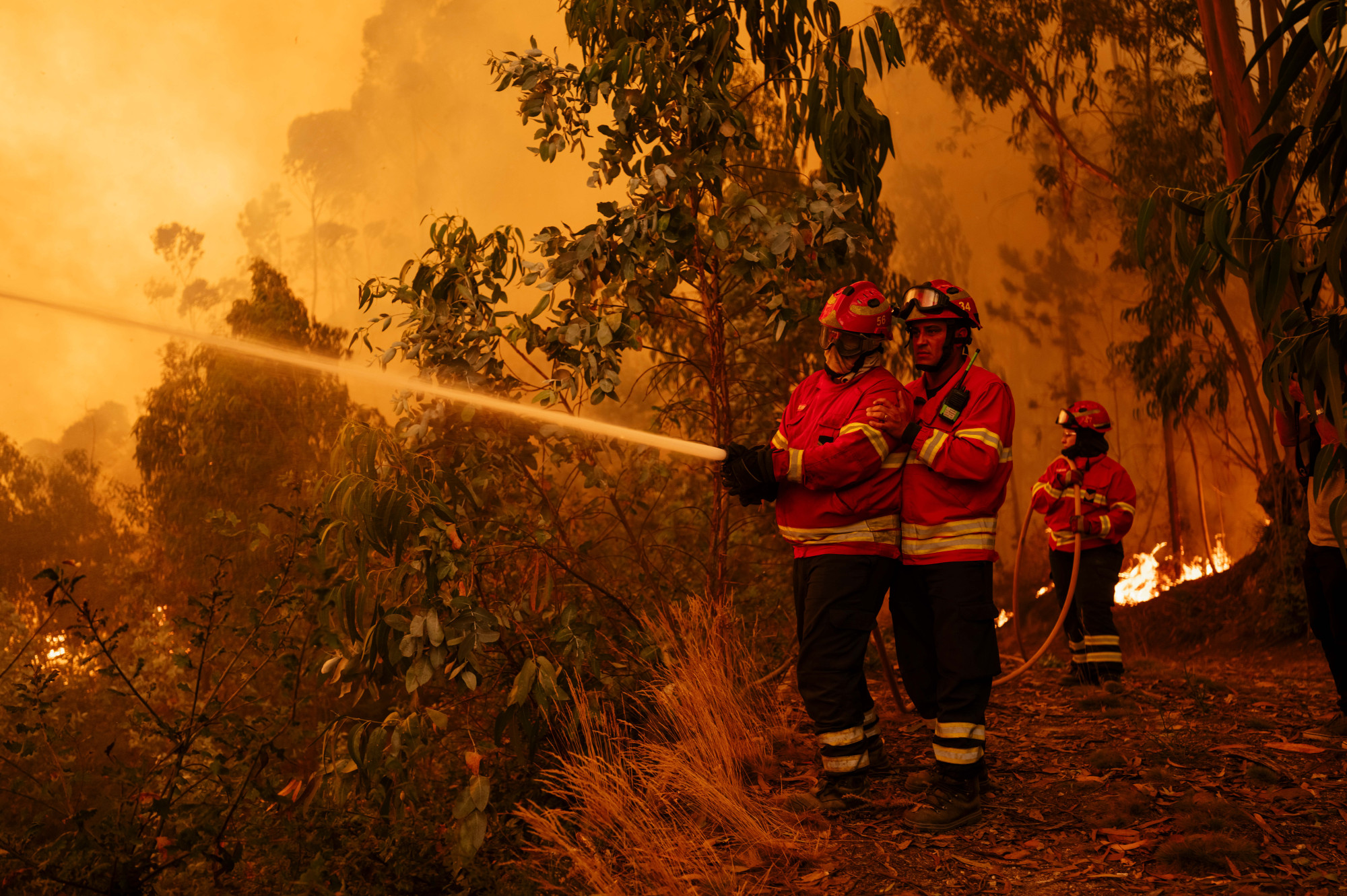
What made the case historically significant was its reach. The young applicants did not bring a complaint against Portugal alone, but against 32 other European countries, including some of the continent’s largest greenhouse gas emitters. They asked the court to order tougher climate measures.
In April 2024, however, the court dismissed the case on procedural grounds. It found that the applicants had not first exhausted legal remedies in their own country and that it lacked jurisdiction over all the states named in the complaint. Although it did not rule on the substance of their climate arguments, the case resonated widely. It showed that the climate crisis is increasingly viewed as a human rights issue, not simply a matter of environmental protection.
A Fourth Branch for Those Without a Voice
Birnbacher identifies another major problem: modern democratic institutions largely operate within the present. Climate change does not. Its effects extend across decades and centuries. He therefore looks for ways to build long-term responsibility into the structure of government. His proposal is known as the “fourth branch” model.
The idea is to add an institution representing future generations to the traditional legislative, executive and judicial branches—a kind of council of guardians of the future.
Its role would be to assess decisions not only by asking whether they benefit us today, but also by asking what kind of world they leave to those who will live after us.
The closest practical example comes from Wales, which in 2015 became the first to recognize in law a government obligation to protect the interests of future generations, through the Well-being of Future Generations Act.
The law established an independent Future Generations Commissioner, tasked with monitoring whether public institutions consider the long-term consequences of their decisions.
Welsh public bodies are required to take a long view, considering the impact of decisions 50 years or more into the future. One prominent example involved a major road expansion project costing millions of pounds. The commissioner challenged it on the grounds that committing substantial public funds to fossil-fuel-dependent infrastructure would conflict with obligations to future generations. The alternative was a shift in priorities, directing investment toward more sustainable public transport.
Germany took a different route. Rather than creating a new institution, its legal system adjusted existing constitutional mechanisms. In a 2021 ruling, the Federal Constitutional Court found that the country’s climate law did not sufficiently protect the freedoms of future citizens.
The court’s reasoning was that today’s emissions decisions directly affect the freedom available to future generations. If too much of the “carbon budget” is spent now, people in the future will face much tighter restrictions to avoid catastrophic climate consequences. Their future freedoms would therefore be compromised.
Both approaches have fierce critics. The most common objection concerns enforcement. Recognizing a moral or legal obligation toward future generations is not enough. The central question is how to ensure that obligation actually changes decisions.
Without clear oversight and consequences, institutions designed to protect the future risk remaining symbolic gestures.
What Can We Do as Individuals?
Looking for an answer, I turned to another book: Humankind: A Hopeful History by Dutch historian and writer Rutger Bregman.
Bregman became especially well known after a panel at the World Economic Forum in Davos in 2019, when he directly challenged the billionaires and politicians gathered there. He highlighted what he saw as the Davos paradox: people who convene to discuss inequality often avoid discussing their own role in the economic system that produces it. He likened it to a conference of firefighters at which nobody wanted to mention water—the most obvious solution. In this case, his criticism concerned tax avoidance by the wealthy.
In Humankind, Bregman describes a revealing experiment involving German psychologist and neuroscientist Tania Singer and Matthieu Ricard, a Buddhist monk who left a scientific career behind.
Ricard is known for his extraordinary ability to control his thoughts. Bregman writes that he had spent a cumulative 50,000 hours meditating to reach that level.
Singer invited him to spend a morning in her brain scanner to study what happens when we feel empathy. To elicit an emotional response, she showed him a documentary the night before about abandoned children in an institution in Romania. The following day, she asked him to immerse himself in their suffering. After the session, Ricard was exhausted.
She then changed the approach. Again, she asked him to think about the children, but not to imagine being in their place. Instead, he was to “be there for them.” The difference was visible in the brain scans. Empathy activated the anterior insula, a region that links bodily sensations with conscious feelings and the motivation to act. It turns signals such as tension or a “gut feeling” into emotional experience. It also helps generate feelings such as love, fear and disgust, and recognize the emotional states of others.
The second experiment activated entirely different regions: the corpus striatum, which forms part of the reward system and is involved in motivation, learning and the satisfaction of doing something we regard as worthwhile; and the orbitofrontal cortex, which helps assess the consequences of our actions, make social and moral decisions, and regulate emotions. It weighs what is “right,” or useful, in a given situation.
Instead of exhaustion, there was energy. What emerged was compassion—a sense of responsibility grounded in care.

Can We Train the Brain to Feel Compassion?
The distinction between empathy and compassion may be exactly what we need when discussing the climate crisis. Empathy connects us to others, but it has limits. Constantly immersing ourselves in someone else’s pain can leave us exhausted, overwhelmed and ultimately passive. Compassion, Bregman explains, means recognizing suffering and acting on that understanding. It is “more controlled, more distanced and more constructive.”
This does not mean feeling less. It means turning feeling into action. That may be a crucial distinction when it comes to climate change.
If we keep saying the future is catastrophic, the consequences inevitable and everything lost, we risk creating a sense of helplessness. But if we develop the ability to see the problem, acknowledge its gravity and still believe our actions matter, we create room for change.
The brain experiment points to something else: the mind can be trained, just like the body. Developing attention, patience and the ability to see other people’s perspectives can also strengthen our capacity for collective responsibility. The future of the planet is therefore not only a question of technology, economics and politics. It may be, above all, a question of the kind of people we want to become.
And so, to the closing lines of my nephew’s poem. It begins with an almost dystopian vision, but ends with a call to responsibility:
“The Earth looks at us with a sorrowful face, Bearing the many scars we have placed. It gave us life, it gave us a home. Now it stands wounded, and all alone.”
Those lines recognize that the world we have is not ours alone, and that what we take for granted today may be unavailable to someone tomorrow. The fact that a 13-year-old already understands that connection may be the strongest reason for hope. Good grief!