Imagine your favorite song or album earning money for you—much like an apartment you rent out, but without maintenance, repainting or noisy tenants. Over the past few years, music rights have become an increasingly popular investment.
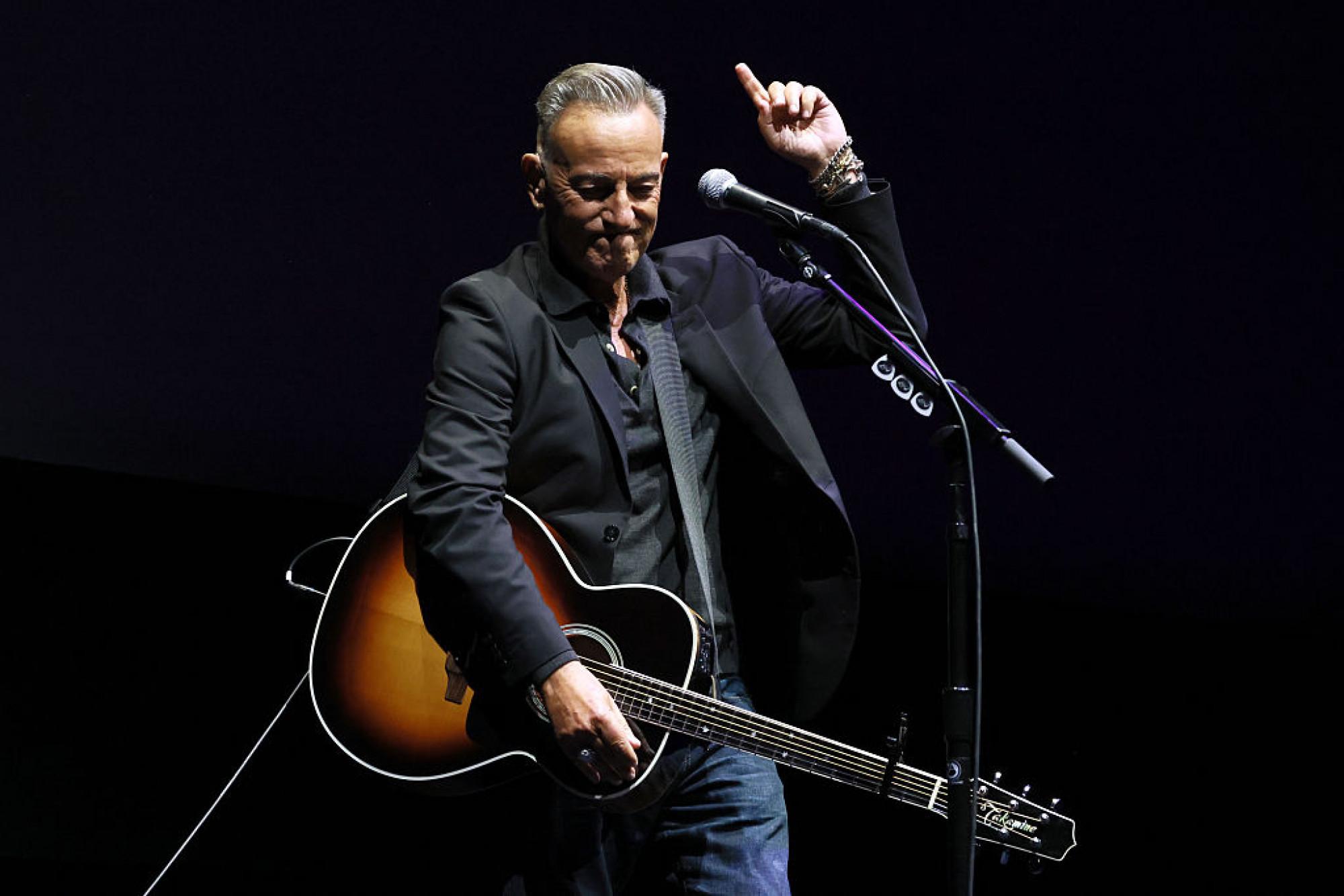
Tony Minella, president of Eldridge Industries, recently told the Milken Institute Asia Summit in Singapore that investing in the song catalogs of Bruce Springsteen or the Killers works much like investing in real estate, only more efficiently. “You don’t have to do renovations, you don’t have to maintain a building. You have a catalog you can re-record, you can pursue sponsorships, and they have delivered exceptional results for us,” he said. One example: annual revenue from Springsteen’s Born to Run has increased from about $7 million to $17 million since 2021.
The growing popularity of streaming services has further boosted song revenues. Rights holders can now earn money whenever a track is played on Spotify, YouTube or the radio. Revenue from recorded-music streaming rose from about $1.8 billion a decade ago to $20.4 billion in 2024, according to the International Federation of the Phonographic Industry.
Companies such as London-based Recognition, owned by Blackstone, even sell bonds backed by song rights, giving investors a share of royalties. Music-rights-backed bonds totaled about $1.7 billion in 2025, according to Bloomberg News.
In short, music is no longer just something to listen to. It is becoming an investment opportunity that can generate passive income. But how can an ordinary investor enter a market once reserved for big funds and wealthy individuals?
Digital platforms offer one route. You do not need millions in capital: you can select a portfolio of songs and receive income from their use directly into your account. One such platform is ANote Music, which lets individual investors buy fractions of song catalogs and earn royalties.
Marzio Schena, Matteo Cernuschi and Grégoire Mathonet founded the platform in 2020. Schena told Bloomberg Adria the idea originated in 2017, when he and Cernuschi were watching Sanremo, Italy’s prestigious music festival. “One artist’s performance immediately told me he would win. He did, and the song became a huge commercial success,” Schena recalls.

The experience prompted a question: what if people could do more than predict success in music, and participate financially in it? “A simple bet ends with the competition’s result. A real investment could create long-term value, because royalties from music rights typically last more than 70 years, generating recurring income,” Schena says.
Finding Common Ground Between Music and Finance
The founders began studying the music industry through an investment lens. In a period of negative interest rates, this asset class, largely disconnected from traditional financial markets, was showing signs of growth. That encouraged a team with complementary backgrounds: Schena in fund management and finance, Cernuschi in IT, and Mathonet in technology and the digitization of financial processes.
“We quickly noticed that, apart from a few intermediaries handling large music-catalog transactions, there was no genuinely liquid or accessible market for smaller investors and music-rights owners. The ecosystem lacked transparency, price discovery was poor, and participation was limited,” Schena says. Music royalties have also historically shown “low correlation with equities and other financial assets,” preserving their appeal as an increasingly elusive source of passive income.
One of the first challenges was bridging two very different vocabularies. Music professionals talk about publishing, masters and neighboring rights; publishers and subpublishers; performing rights organizations and collective management organizations; licenses, royalty statements and recoupment terms. Investors expect the language of cash flows, multiples, historical returns and risk.
“On one side, it had to be the fastest and most accessible tool for investors to gain exposure to this new alternative asset class. On the other, the platform had to help artists and music professionals unlock the value of future royalties in a simple, transparent and accessible way—not just for specialists, but for a public with no prior knowledge,” he says.
Schena stresses that the model is not designed to replace large private transactions. Those will continue, particularly for major catalogs and institutional investors. “Our role is to sit alongside that segment and offer a complementary model: a transparent, standardized platform where rights holders can monetize part of their future royalties on clearly defined terms, while investors can participate with smaller sums and greater flexibility.”

A Market Hitting the Right Notes
Global music-royalty revenues exceeded $45 billion in 2024, following growth of 11% in 2023, strengthening their appeal as an alternative asset class. Streaming platforms now generate more than 67% of global music revenue, helping even decades-old songs continue to provide steady income for rights holders.
How It Works
ANote Music lets investors buy and sell shares, or fractions, of music catalogs. Those shares entitle them to a portion of the future royalties the catalogs generate.
Buying a share gives you a royalty entitlement: a proportional claim on future income that a rights holder—a songwriter, artist, publisher or label—earns from the use of their work. Royalties arise from uses such as streaming, radio airplay and television synchronization.
Catalogs are first offered through an initial auction, in which the original rights holders sell part of their future royalties. Investors submit bids and buy shares in this primary-market stage. The shares can then trade on a secondary market, where investors buy from and sell to one another.
After a catalog is listed and its shares sold, the underlying royalties continue to be collected by the original royalty distributors, such as collective management organizations, publishers or labels, depending on the rights involved. They collect revenue from Spotify, YouTube, television stations, radio or live performances, and periodically transfer the proceeds to ANote Music.
“When we receive royalties, we distribute them to all investors holding shares in the relevant catalog. Payments are usually monthly, quarterly or semiannual, depending on when the original distributor provides the revenue and reports,” Schena says. There are two potential sources of returns.
“First, royalties, paid periodically according to the performance of the catalogs in your portfolio. Second, a capital gain or loss, which can arise if you sell your share on the secondary market at a price different from what you paid.”
Buying shares in multiple catalogs allows investors to build a diversified portfolio, with royalty streams across genres, rights types and release periods. Royalties are credited automatically to the investor’s account. Capital gains are realized only when shares are sold.
Safeguards for Investors and Rights Holders
Each catalog on ANote Music comes with structured data to help investors analyze its key characteristics. “For every listing, we show royalty performance over time, payment frequency, an internal rate of return based on the current market price and previously distributed royalties, the types of rights and the listing period. After buying shares, investors can track payments directly in their portfolio, compare incoming distributions with historical trends and download detailed reports at any time,” Schena says.
He says the main benefit for rights holders is a transparent, open environment in which they can monetize some or all of their future royalty income without surrendering artistic control or copyright. “They benefit from market-driven price discovery rather than private, opaque negotiations. After listing, rights holders can monitor a catalog’s performance and, in certain cases, activate a buyback clause to repurchase the shares at a small premium and delist the catalog.”
Creative Assets Depend on Changing Tastes
Music royalties are directly tied to usage patterns. Like any creative asset, they are exposed to shifts in listening habits and audience preferences. “These fluctuations are part of the nature of this market,” Schena says, emphasizing that ANote Music does not provide investment advice. “Our role is to provide clear data and a structure that allows investors to make informed decisions.”
The platform has introduced a set of internal safeguards for investors and rights holders, known as the Investor Protection Programme, or IPP, to support and simplify the experience.
“The IPP continuously monitors trading activity to detect potential risks. It flags low-liquidity situations, price volatility outside normal ranges, or trades that would result in a very low yield based on recent royalty history. It also monitors catalog valuations to identify transactions that deviate significantly from reference parameters.”
Even so, Schena is clear that tools designed to reduce or flag risks cannot eliminate them entirely.
Assessing a Song’s Long-Term Value
Schena says the platform focuses on catalogs whose royalties come primarily from songs with a proven track record or an established place in their life cycle.
“Before listing, every catalog goes through a structured due-diligence process. We analyze historical royalty performance: how much the catalog earned, how consistently and with what level of volatility. We then compare those results with market benchmarks, using multiples common in recent industry transactions. Music-specific indicators are also important: the age and usage of songs, the distribution of revenue across tracks, and how the catalog fits the typical royalty life cycle, particularly the stability of long-term income,” he says.
The valuation model draws on years of quantitative research and analysis of music transactions, and is updated regularly to reflect market conditions. “We use it to define a reference price range for each listing.”
The valuation process is conducted with rights holders and reflects their interests. It establishes an opening listing price, but the final price is determined by the market through auctions and secondary-market trading.
What Are the Fees?
On ANote Music, Schena says, the fee is 4% for shares initially bought at auction, or 8% for those bought on the secondary market. The charge is deducted from royalties received and capped at 0.5% of the catalog’s value per payout.
Schena expects music-royalty investment to gain momentum over the next five years. His main reason is continued streaming growth. “Look at Spotify’s recent performance and the steady increase in subscribers, especially in emerging markets.” Streaming also generates transparent, measurable usage data, which is crucial to analyzing catalog performance and makes the asset class more accessible and easier for investors to understand.
“AI could also open new revenue streams, particularly through licensing existing songs to artificial-intelligence platforms. This is still at an early stage and depends on regulation and adoption, but the potential is there,” Schena concludes.